Summary
Exhibit title:
Designed to Dread: How Horror Games Before 2005 Created Fear
Exhibit topic:
This exhibit explores how horror video games before 2005 created fear through game design rather than relying only on monsters or gore. It focuses on early survival horror and related games from the Syd Bolton Collection, researching how video game shaped the player’s fear experience.
Question your exhibit answers/addresses:
How did horror games before 2005 create fear?
The “answer” to this question. The thesis of your exhibit:
Before 2005, horror games created fear not mainly through graphic violence, but through design choices that made players feel vulnerable, disoriented, and uncertain. Restricted camera views, unsettling sound, limited weapons and healing items, unstable spaces, and weak player control worked together to turn play itself into an experience of fear.
What is the breakdown of your exhibit? How will the answer/addressing be shown? In a few sentences summarize how you organized the material of your exhibit.
1. The Rise of Survival Horror
This section introduces games that helped establish horror as a distinct genre before 2005.
2. Restricted Vision and Uncertain Space
This section focuses on how horror games limited what players could see and understand.
3. Atmosphere and Psychological Fear
This section examines how horror games created fear through mood, sound, and suggestion.
4. Vulnerability, Weakness, and Survival
This section looks at gameplay mechanics that made players feel exposed and powerless.
Exhibit audience: What are the considerations you have to make for those audiences (i.e.: an audience of experts would require different reference points than an audience of generalists. Who is your imagined audience? How are you developing the exhibit for them?):
The exhibit is designed for a general audience with an interest in video games, media history, or horror, including students who may not be familiar with early horror games. Because this audience may not know the history of survival horror or the technical limits of older consoles, the exhibit uses clear language, short historical context, and direct explanations of key design terms. The goal is to make the exhibit accessible to non-specialists while still being thoughtful and historically grounded.
Collaboration: Briefly describe who, if anyone, you worked with to capture artifacts for your exhibits.
Did not collaborate with anyone to collect artifacts.
By: Hongli Ding
Introduction
This exhibition explores how horror games prior to 2005 cultivated fear through specific design choices. Using examples from the Syd Bolton collection, it reveals that pre-2005 horror games did not rely solely on monsters, violence, or shocking visuals to instill dread. Instead, they frequently employed meticulous design to make players feel afraid. Early horror games integrated fear into the gameplay itself through limited camera angles, dark and ambiguous spaces, unsettling sound design, scarce resources, and constraints on player control. Rather than empowering players with certainty, these games frequently left them feeling vulnerable, disoriented, and insecure.
The exhibition's exhibits are organized into four sections. The first section explores the rise of survival horror as a recognizable genre. The second section examines how games employ limited vision and unstable spaces to cultivate uncertainty. The third section focuses on atmosphere and psychological dread, particularly the use of sound and suggestion. The final section explores player vulnerability and weakness mechanics. Collectively, these exhibits demonstrate that early horror games achieved fear not solely through content, but through game structure. They enabled players to directly experience fear stemming from limitation, uncertainty, and the challenge of survival.
The Rise of Survival Horror
1. Alone in the Dark (1994)
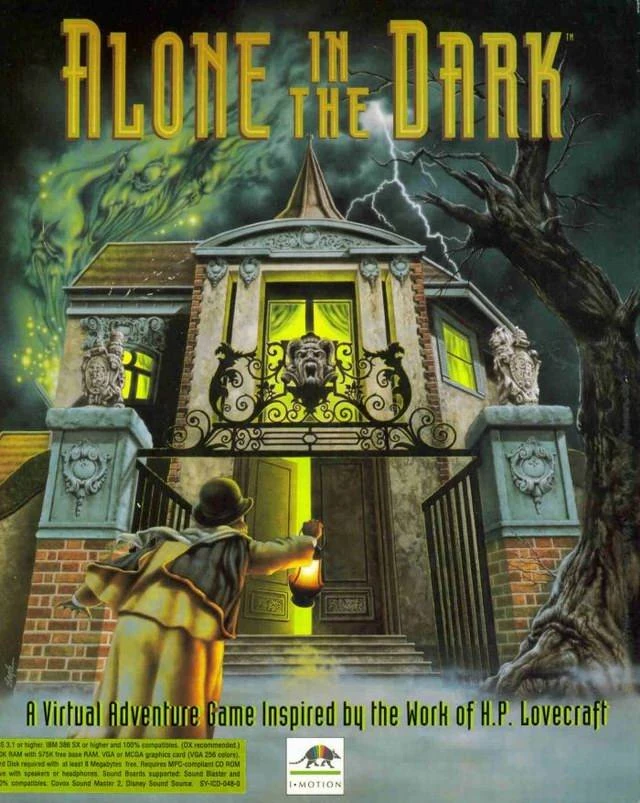
Alone in the Dark is an early survival horror game originally released in 1992 and later adapted to other platforms, including the 3DO. The game takes place in a haunted mansion where the player explores rooms, solves puzzles, and encounters supernatural threats. It combines 3D character models with fixed camera angles and pre-rendered backgrounds, creating a style that was unusual for its time. Because of its slow pacing and eerie setting, the game became one of the important early examples of horror in digital games.
This game shows how fear in early horror games could come from limitation rather than spectacle. The fixed camera angles restrict what the player can see, while the mansion’s dark and unfamiliar spaces make exploration feel tense. Instead of making the player feel powerful, the game creates fear by making movement uncertain and danger hard to predict. In this way, Alone in the Dark helps show how horror games before 2005 used design choices to make players feel vulnerable and uneasy.
References
Bolton Collection. (1994). Alone in the Dark [Video game]. University of Toronto Mississauga.
Bycer, J. (2021). GAME DESIGN DEEP DIVES : horror. CRC PRESS.
Alone in the Dark Wiki. (n.d.). Alone in the Dark (1992). Fandom. https://aloneinthedark.fandom.com/wiki/Alone_in_the_Dark_(1992)
2. Resident Evil (1996)
Resident Evil is one of the most influential horror games of the 1990s and a key title in the development of survival horror. Set in a mansion filled with zombies, monsters, and hidden experiments, the game follows special agents as they investigate a mysterious outbreak. It is known for its fixed camera angles, puzzle-solving, limited inventory, and tense exploration. The game became highly successful and helped define the structure of many later horror games.
This game shows that fear can be built through mechanics as much as through imagery. The player has limited ammunition, restricted inventory space, and little certainty about what is waiting in the next room. The camera often hides danger until the player is already close to it, which makes even walking through a hallway stressful. Resident Evil demonstrates how early horror games created fear by combining visual restriction, scarce resources, and constant uncertainty.

References
Bolton Collection. (1994). Alone in the Dark [Video game]. University of Toronto Mississauga.
Resident Evil Wiki. (n.d.). Resident Evil (1996 game). Fandom. https://residentevil.fandom.com/wiki/Resident_Evil_(1996_game)
GameFAQs. (n.d.). Resident Evil. GameSpot. https://gamefaqs.gamespot.com/ps/198454-resident-evil
3. Resident Evil 2 (1998)
Resident Evil 2 continues and expands the formula established by the first game. Set in Raccoon City during a zombie outbreak, it follows Leon Kennedy and Claire Redfield as they try to survive and escape. The game uses fixed camera angles, cinematic presentation, puzzles, and combat, but it also broadens the setting from a single mansion to a larger urban disaster. This made the world feel bigger while still keeping the close, tense structure of survival horror.
Resident Evil 2 shows how fear could be intensified even as horror games became larger and more ambitious. Although the setting is bigger, the player still feels trapped by narrow corridors, sudden enemy encounters, and limited supplies. The game constantly creates tension between exploration and danger: moving forward is necessary, but every step may lead to an attack. Fear before 2005 often came from game design that kept the player in a state of vulnerability and suspense.

References
Bolton Collection. (1998). Resident Evil 2 [Video game]. University of Toronto Mississauga.
Resident Evil Wiki. (n.d.). Resident Evil 2 (1998 game). Fandom. https://residentevil.fandom.com/wiki/Resident_Evil_2_(1998_game)
Restricted Vision and Uncertain Space

4. Resident Evil Director’s Cut (1997)
Resident Evil Director’s Cut is a revised version of the original Resident Evil. It includes changes to the game’s difficulty and arrangement, offering players a familiar world that can still feel unpredictable. Like the original, it is set in a mansion full of biological horrors, puzzles, and hidden threats. Because it reworks an already influential horror game, it helps reveal which design elements were considered central to the genre.
It highlights how restricted vision and controlled space are essential to fear in early horror games. The game’s fixed camera angles force players to move without fully understanding the space around them. Doors, corners, and off-screen areas become threatening because the player cannot see everything at once. In this way, Resident Evil Director’s Cut shows that fear was often produced not by constant action, but by the careful control of visual information.
References
Bolton Collection. (1997). Resident Evil Director’s Cut [Video game]. University of Toronto Mississauga.
Resident Evil Wiki. (n.d.). Resident Evil: Director's Cut. Fandom. https://residentevil.fandom.com/wiki/Resident_Evil:_Director%27s_Cut

5. Silent Hill (1999)
Silent Hill is a psychological horror game released for the PlayStation in 1999. The player controls Harry Mason, who searches for his missing daughter in a fog-covered town filled with disturbing creatures and shifting realities. The game is known for its heavy atmosphere, strange sound design, symbolic imagery, and use of fog and darkness. Unlike many action-focused games of its time, Silent Hill emphasizes dread, confusion, and emotional discomfort.
This game shows how horror games before 2005 could create fear through atmosphere and uncertainty rather than only direct confrontation. Fog limits visibility, making the town feel endless and unstable, while distorted sounds and radio static suggest danger before it can be seen. The player often feels unsure not only about what is nearby, but about what is real. Silent Hill demonstrates that fear can come from disorientation, suggestion, and the feeling that the world itself cannot be trusted.
References
Bolton Collection. (1999). Silent Hill [Video game]. University of Toronto Mississauga.
IMDb. (n.d.). Silent Hill. https://www.imdb.com/title/tt0194376/

6. Clock Tower 3 (2003)
Clock Tower 3 is a horror game that combines exploration, puzzle-solving, and chase sequences. The player controls Alyssa Hamilton, a young girl who becomes involved in a story of violence, memory, and supernatural pursuit. Unlike many horror games that focus on direct combat, Clock Tower 3 emphasizes escape and hiding. The player is often pursued by enemies who are more powerful and difficult to fight directly.
This game shows how fear can come from weakness and forced movement through dangerous space. Instead of feeling like a fighter, the player often feels like prey. Being chased through hallways and rooms creates panic, especially because the player has limited control over the situation. Clock Tower 3 showing that horror games often create fear by making the player feel exposed, hunted, and unable to fully control the outcome.
References
Bolton Collection. (2003). Clock Tower 3 [Video game]. University of Toronto Mississauga.
Clock Tower Wiki. (n.d.). Clock Tower 3. Fandom. https://clocktower.fandom.com/wiki/Clock_Tower_3
IMDb. (n.d.). Clock Tower 3. https://www.imdb.com/title/tt0363521/
Atmosphere and Psychological Fear
7. Echo Night (1998)
Echo Night is a first-person horror adventure game in which the player explores haunted spaces and encounters ghosts connected to unfinished stories. Compared with more action-oriented horror games, it is quieter and slower, focusing on exploration, atmosphere, and mystery. Much of the experience comes from moving carefully through empty-looking spaces and gradually learning what happened there. The game creates an eerie tone without depending on constant combat.
This game shows that fear can come from anticipation and mood rather than visible violence. Empty spaces, quiet pacing, and ghostly appearances make the player uneasy even when immediate danger is not always present. The game encourages players to imagine what might happen next, which can be more unsettling than direct attack. Echo Night helps demonstrate that early horror games often relied on suggestion, silence, and uncertainty to create fear.

References
Bolton Collection. (1998). Echo Night [Video game]. University of Toronto Mississauga.
MobyGames. (n.d.). Echo Night. https://www.mobygames.com/game/40472/echo-night/
8. Fatal Frame (2001)
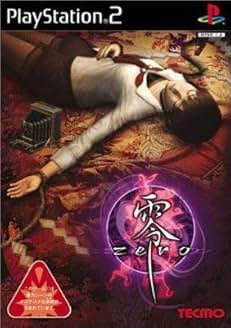
Fatal Frame is a survival horror game in which the player explores a haunted mansion and defeats ghosts using a special camera. The main character, Miku Hinasaki, searches for her missing brother while uncovering the history of the house and its spirits. The game is especially known for its unusual combat system, since the player must face ghosts directly and photograph them at close range. This creates a very different kind of horror experience from games built around guns or physical weapons.
This game is turns the act of looking into a source of fear. To survive, the player cannot simply run away; they must face the ghost and wait for the right moment to take a picture. This creates intense psychological pressure, because the player is forced to stare at what frightens them. Fatal Frame shows how early horror games created fear by making the player vulnerable not only through weak combat, but through mechanics that required direct confrontation with the terrifying object.

References
Bolton Collection. (2001). Fatal Frame [Video game]. University of Toronto Mississauga.
IMDb. (n.d.). Fatal Frame. https://www.imdb.com/title/tt0340311/
Vulnerability, Weakness, and Survival
9. Parasite Eve (1998)
Parasite Eve is a hybrid game that combines horror themes with role-playing mechanics. Set in New York City, it follows Aya Brea as she investigates a series of strange biological events involving mutation and destruction. The game mixes exploration, story scenes, and battle sequences, creating a style that is somewhat different from traditional survival horror. Even so, it shares many of the same themes of bodily danger, uncertainty, and survival under pressure.
Parasite Eve shows that fear before 2005 could also emerge through systems of risk and survival. Battles require planning, resources are limited, and the player is constantly reminded that the body itself can become unstable or dangerous. The game’s horror comes not only from monsters, but from the idea that normal life can suddenly become threatening and uncontrollable. It showing that fear in early horror games could be created through vulnerability, danger, and the constant possibility of failure.

References
Bolton Collection. (1998). Parasite Eve [Video game]. University of Toronto Mississauga.
IMDb. (n.d.). Parasite Eve. https://www.imdb.com/title/tt0261889/
10. Haunting Ground (2005)
Haunting Ground is a survival horror game in which the player controls Fiona Belli, a young woman trapped in a castle and pursued by enemies. The game emphasizes escape, hiding, and helplessness rather than traditional combat. Fiona can defend herself only in limited ways, and much of the game is built around avoiding capture. A key mechanic is her relationship with a dog companion, which adds another layer to survival and protection.
This game makes vulnerability the center of play. Fear comes from being chased, from lacking strong weapons, and from constantly feeling at risk of capture. The player’s weakness is not a side effect of the game; it is one of the main reasons the game feels frightening. Haunting Ground clearly supports that horror games before 2005 created fear by making players feel powerless, exposed, and uncertain about whether they could survive.

References
Bolton Collection. (2005). Haunting Ground [Video game]. University of Toronto Mississauga.
IMDb. (n.d.). Haunting Ground. https://www.imdb.com/title/tt0457376/
References:
Bolton Collection. (1994). Alone in the Dark [Video game]. University of Toronto Mississauga.
Bolton Collection. (1996). Resident Evil [Video game]. University of Toronto Mississauga.
Bolton Collection. (1997). Resident Evil Director’s Cut [Video game]. University of Toronto Mississauga.
Bolton Collection. (1998). Echo Night [Video game]. University of Toronto Mississauga.
Bolton Collection. (1998). Parasite Eve [Video game]. University of Toronto Mississauga.
Bolton Collection. (1998). Resident Evil 2 [Video game]. University of Toronto Mississauga.
Bolton Collection. (1999). Silent Hill [Video game]. University of Toronto Mississauga.
Bolton Collection. (1999). Dino Crisis [Video game]. University of Toronto Mississauga.
Bolton Collection. (1999). Resident Evil 3 Nemesis [Video game]. University of Toronto Mississauga.
Bolton Collection. (2001). Fatal Frame [Video game]. University of Toronto Mississauga.
Bolton Collection. (2003). Clock Tower 3 [Video game]. University of Toronto Mississauga.
Bolton Collection. (2005). Haunting Ground [Video game]. University of Toronto Mississauga.
Bycer, J. (2021). GAME DESIGN DEEP DIVES : horror. CRC PRESS.
Alone in the Dark Wiki. (n.d.). Alone in the Dark (1992). Fandom. https://aloneinthedark.fandom.com/wiki/Alone_in_the_Dark_(1992)
Resident Evil Wiki. (n.d.). Resident Evil (1996 game). Fandom. https://residentevil.fandom.com/wiki/Resident_Evil_(1996_game)
GameFAQs. (n.d.). Resident Evil. GameSpot. https://gamefaqs.gamespot.com/ps/198454-resident-evil
Resident Evil Wiki. (n.d.). Resident Evil 2 (1998 game). Fandom. https://residentevil.fandom.com/wiki/Resident_Evil_2_(1998_game)
Resident Evil Wiki. (n.d.). Resident Evil: Director's Cut. Fandom. https://residentevil.fandom.com/wiki/Resident_Evil:_Director%27s_Cut
IMDb. (n.d.). Silent Hill. https://www.imdb.com/title/tt0194376/
Clock Tower Wiki. (n.d.). Clock Tower 3. Fandom. https://clocktower.fandom.com/wiki/Clock_Tower_3
IMDb. (n.d.). Clock Tower 3. https://www.imdb.com/title/tt0363521/
MobyGames. (n.d.). Echo Night. https://www.mobygames.com/game/40472/echo-night/
IMDb. (n.d.). Fatal Frame. https://www.imdb.com/title/tt0340311/
IMDb. (n.d.). Parasite Eve. https://www.imdb.com/title/tt0261889/
IMDb. (n.d.). Haunting Ground. https://www.imdb.com/title/tt0457376/
Create Your Own Website With Webador